How does a prepaid cell phone work? You pay for a set period of service before you use it, usually 30 days of talk, text and data, with no annual contract and no credit check. When the period ends you pay again to keep going. If you don’t, service pauses instead of running up a bill.
This guide covers the seven things worth knowing before you switch: how paying works, what a prepaid SIM card is, who the carriers really are, what happens when you miss a payment, the phone-lock rules, and when prepaid beats a contract. Carrier rules were checked against Verizon’s, AT&T’s, T-Mobile’s and Cricket’s own pages on November 16, 2026.
How does a prepaid cell phone work, step by step?
A prepaid phone is a normal phone on a pay-first plan. The network, the calls and the apps are the same. Only the billing is different.
- Pick a phone. Buy one from the carrier, or bring a phone you already own. It has to be unlocked and compatible with that network.
- Pick a plan and pay. Most plans cover one month. Some carriers also sell 3-month or 12-month plans at a lower monthly price.
- Activate. Insert the carrier’s SIM card or install its eSIM, then follow the activation prompts. You can get a new number or move your current one.
- Use the phone as usual. Calls, texts and data come out of what your plan includes.
- Renew. Pay again on your renewal date, by hand or with automatic payments. Cricket, for example, says your payment is due on the same date every month.
There is no bill at the end of the month because you have already paid. That is the whole idea.
Prepaid vs postpaid: what is actually different?
Postpaid is the traditional plan from a big carrier: you use the service, then get a bill. Prepaid flips the order.
| Prepaid | Postpaid | |
|---|---|---|
| When you pay | Before the service period | After it, by monthly bill |
| Credit check | Normally none | Usually required |
| Contract | None; stop any time | Often tied to phone financing or bill credits |
| The phone | Paid in full, or bring your own | Often paid off in monthly installments |
| If you don’t pay | Service pauses | The bill becomes overdue |
| Surprise charges | Rare; you can’t spend more than you loaded | Possible (overages, roaming, add-ons) |
AT&T describes its prepaid service as “no annual contract, no credit check”, and Cricket uses nearly the same words. T-Mobile’s own guide sums it up well: prepaid is a different way to pay, not a lesser service.
What is a prepaid SIM card, and how do prepaid SIM cards work?
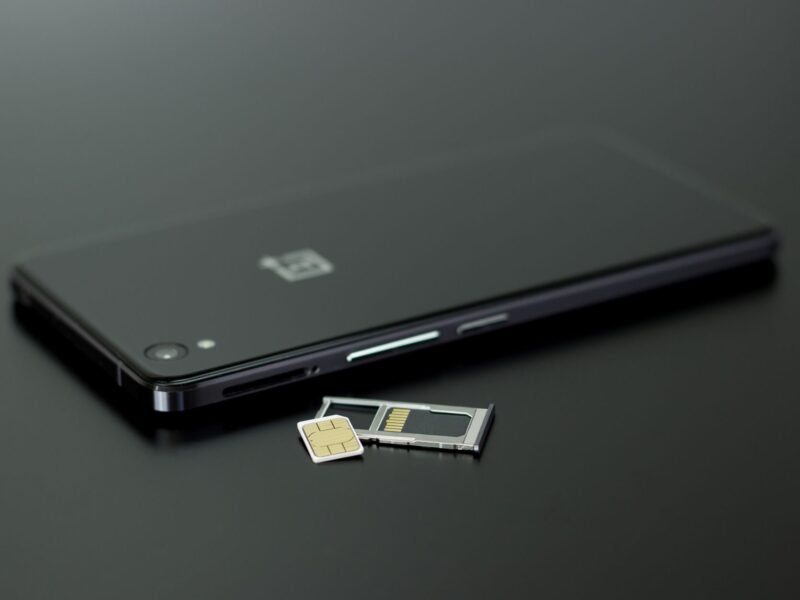
A prepaid SIM card is the same small chip any phone plan uses. What makes it “prepaid” is the account behind it, not the card. The SIM tells the network which account your phone belongs to, and the network checks that the account has paid-up service before it lets calls and data through.
You can buy a prepaid SIM kit online, in a carrier store or at a big retailer, put it in an unlocked phone and activate it in a few minutes. Many carriers now offer an eSIM instead, which is a SIM built into the phone that you set up by scanning a QR code. AT&T’s bring-your-own-phone page has a quick test: dial *#06#, and if the screen shows an EID number, your phone supports eSIM. Our guide to moving an eSIM to a new iPhone explains how eSIM works in more detail.
Prepaid SIMs are also popular for travel. A local prepaid SIM or travel eSIM, for a week in the Czech Republic for example, is often cheaper than roaming on your home plan. Check whether it comes with a phone number for voice calls, because some travel eSIMs are data only.
Who are the prepaid cell companies?
Prepaid wireless service providers fall into three groups, and knowing which is which tells you what coverage to expect.
- The big three’s own prepaid plans: Verizon Prepaid, AT&T Prepaid and T-Mobile Prepaid.
- Brands the big three own: Cricket belongs to AT&T. Metro by T-Mobile and Mint Mobile belong to T-Mobile. Verizon bought TracFone in 2021, along with Straight Talk and Total Wireless.
- Independent MVNOs: A prepaid MVNO (mobile virtual network operator) owns no towers. It rents space on one or more of the big three networks and resells it, usually for less.
So coverage on a prepaid brand is the coverage of the network underneath it. Before you switch, find out which network the brand uses and check that network’s map for your home and workplace.
What about US Cellular prepaid? T-Mobile completed its purchase of UScellular’s wireless business on August 1, 2025. UScellular’s old prepaid help pages now redirect to T-Mobile, so if you are looking for US Cellular prepaid phones or plans, T-Mobile Prepaid and Metro are where that road leads today.
What happens when your prepaid plan runs out?
Nothing dramatic at first. Your service is paused: no calls, texts or mobile data until you pay again. Wi-Fi still works.
The real risk is your phone number. Carriers keep a paused account for a limited time, then close it and recycle the number. Verizon’s prepaid FAQ says a line suspended for lack of payment can be reconnected by adding funds, but after 90 days without activity Verizon disables the number and closes the account. Another Verizon help page gives 60 days, so treat two months as the safe limit there. Other carriers set their own deadlines, so look yours up before you let a plan lapse.
Two ways to avoid it:
- Turn on automatic payments. Carriers often reward it. Verizon Prepaid currently takes $10 a month off phone plans of $45 or more after the first month.
- Buy several months at once if you are sure about the carrier. AT&T Prepaid currently sells new single-line customers 12 months of unlimited service for $240, which works out to $20 a month. Read the terms first: Cricket’s multi-month plans are not refundable and cannot be changed until the last 30 days.
Can you keep your number and your phone?
Your number: yes, in most cases. You can move a number to a prepaid carrier the same way as to any other. Cricket says you can keep your current number whether you bring your own phone or buy a new one, and AT&T Prepaid has an online check to see if a number is transferable. Start the transfer with the new carrier and keep the old line active until the move finishes. Cancel first and the number may be gone.
Your phone: yes, if it is unlocked. A phone you bought outright from Apple, Samsung or Google is normally unlocked. A phone bought from a carrier usually starts out locked to it. If you are shopping for one, our guide to budget smartphones worth buying lists good unlocked options.
If you bring a phone and it shows no service after activation, the fixes are the same as on any plan. See our guides to SOS Only on iPhone and “Not registered on network” on Android.
The catch: phones from prepaid carriers stay locked for a long time
This is the part most guides skip. Prepaid carriers sell phones cheaply, and in return they lock them to their network for much longer than on postpaid plans. These are the current rules from each carrier’s own policy page:
| Carrier | When a prepaid phone is unlocked |
|---|---|
| Verizon Prepaid | Automatically after 365 days of paid, active service (policy) |
| AT&T Prepaid | After 12 months of paid AT&T service (policy) |
| T-Mobile Prepaid | 365 days after activation, or sooner once the line has had more than $100 in refills |
| Cricket | Phone “may be restricted” to Cricket until 6 months of service (terms) |
A $50 prepaid phone is a good deal only if you plan to stay with that carrier for the lock period. If you like to switch for a better price, buy an unlocked phone and take a SIM-only plan instead.
Two smaller trade-offs to know about. First, on many low-cost plans your data can be slowed when the network is busy. Cricket’s terms say exactly that: it “may temporarily slow data speeds if the network is busy”. Second, extras such as phone financing and some premium perks may be limited or missing on prepaid plans, as T-Mobile’s own guide admits.
When does prepaid beat a contract?
Prepaid is usually the better choice if:
- You own your phone, or you are happy to buy one outright.
- You want a fixed monthly cost with no surprises.
- You have limited or damaged credit, or you don’t want a credit check.
- You need one or two lines, not a large family plan.
- You want a first phone for a child, a backup line or a short-term number.
Postpaid can still make sense if:
- You want a new flagship phone paid off monthly or through trade-in credits.
- You need four or more lines and the per-line price drops sharply.
- You want the carrier’s premium perks and top data priority in crowded places.
A simple way to decide: add up what you pay your carrier over 12 months, including any phone installments, and compare it with 12 months of a prepaid plan on the same network plus the cost of a phone. If prepaid wins and the coverage is the same, there is little reason to stay.
Quick answers
Do prepaid phones need a credit check? No. You pay before you use the service, so carriers have no reason to check your credit. AT&T Prepaid and Cricket both advertise no credit check and no annual contract.
Can I use an iPhone on a prepaid plan? Yes. Any unlocked iPhone or Android phone that is compatible with the carrier’s network will work, using either a physical SIM or an eSIM.
Is prepaid service worse than postpaid? Coverage is the same, because prepaid brands use the same towers. The differences are data priority on some cheaper plans, fewer perks and longer phone-lock periods.
What happens if I forget to refill? Service pauses until you pay. If you leave it too long, the carrier closes the account and you lose the number. Verizon, for example, does this after 60 to 90 days.
Can I switch from prepaid to postpaid later? Yes. The big carriers can move a prepaid line to a postpaid plan, so ask to keep your number when you do it. Expect a credit check at that point.
Do prepaid plan prices include taxes? It depends on the carrier. AT&T Prepaid lists taxes and fees as extra, so check the checkout total before you compare plans.