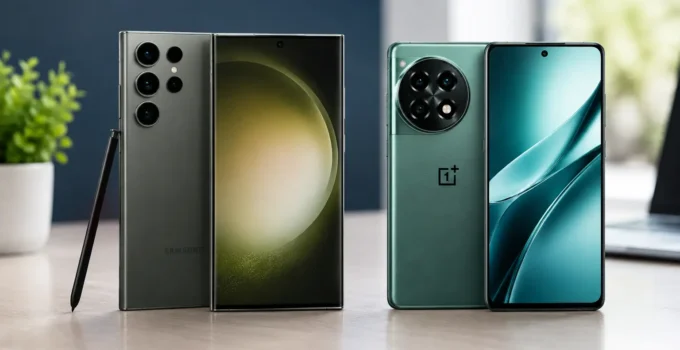
A Samsung vs OnePlus decision is no longer as simple as choosing a well-known brand or the better bargain. Samsung offers the broadest Android lineup, familiar features, and long-term support. OnePlus often focuses on fast performance, very quick charging, and flagship-level hardware at a lower price.
The right choice depends on how you use your phone every day. A person who wants a dependable camera, a compact phone, or a foldable has different priorities from someone who wants maximum speed and a battery that can recharge during a short coffee break.
Samsung vs OnePlus: The Key Differences
Samsung is the safer all-around choice for most buyers because it sells phones at nearly every price level. Its Galaxy lineup includes budget A-series phones, premium Galaxy S models, large Ultra phones, and foldables such as the Galaxy Z Flip and Z Fold. That variety makes it easier to find a Samsung that fits your budget and preferred size.
OnePlus has a more focused lineup. Its flagship phones usually compete directly with Samsung’s Galaxy S models, while its Nord range covers more affordable options in selected markets. OnePlus phones tend to emphasize high-refresh-rate displays, fast processors, large batteries, and charging speeds that Samsung generally does not match.
Neither brand wins every category. Samsung is usually stronger for camera consistency, software support, accessories, and carrier availability. OnePlus is often more appealing if you care most about performance per dollar, charging speed, and a cleaner-feeling Android experience.
Design, Screens, and Everyday Feel
Samsung phones have a polished, recognizable design, with excellent build quality on their premium models. Galaxy S and Ultra devices use bright AMOLED displays that are easy to see outdoors, and Samsung offers more size choices than OnePlus. If you want a small flagship, a big stylus-friendly screen, or a foldable that opens like a mini tablet, Samsung has options that OnePlus does not currently match.
OnePlus flagships also have excellent AMOLED displays, usually with smooth 120Hz refresh rates and strong brightness. They can feel especially fast when scrolling, gaming, or switching apps. OnePlus designs are often less crowded visually, although many models are large. Buyers who prefer a compact phone may find Samsung’s smaller Galaxy S models more practical.
For day-to-day durability, check the exact model rather than assuming every phone has the same protection. Premium Samsung and OnePlus devices may offer water and dust resistance, but ratings can differ across regions and price tiers. A case is still a sensible purchase, especially for curved screens or glass-backed phones.
Samsung has more specialized hardware choices
Samsung stands out if your needs go beyond a standard glass slab. The Galaxy S Ultra line is built for people who want a large display, advanced zoom cameras, and S Pen support. Galaxy Z Fold and Z Flip models offer foldable designs for multitasking or portability.
OnePlus keeps its hardware strategy simpler. That can be a benefit if you just want a fast conventional phone without comparing a long list of similar models. But it also means fewer choices for buyers seeking a small device, built-in stylus, or foldable form factor.
Camera Quality: Consistency vs Value
Samsung usually has the advantage for camera versatility, particularly on high-end Galaxy S Ultra models. Its phones commonly offer dependable main cameras, strong video features, useful portrait tools, and more capable optical zoom on premium devices. Samsung’s camera app also gives beginners simple point-and-shoot options while leaving room for manual controls.
OnePlus cameras have improved significantly, and its flagship models can take excellent photos in daylight and low light. Color processing is often pleasing, portraits can look natural, and the main camera hardware is competitive. Still, results may be less consistent across ultrawide and zoom cameras than Samsung’s best devices, especially when lighting is difficult or subjects are moving.
If photos of children, pets, travel, concerts, or sports matter most, Samsung is often the safer pick. If you mostly shoot everyday photos, social media clips, and occasional portraits, a OnePlus flagship can deliver very good results while leaving more room in your budget.
Do not choose based only on megapixel counts. Sensor size, image processing, stabilization, and lens quality matter more than a large number printed on the spec sheet.
Performance, Battery Life, and Charging
Both brands use powerful processors in their flagship phones, so messaging, streaming, navigation, and most mobile games should feel quick for years. Samsung’s top models are highly capable, particularly for productivity features such as DeX, which can provide a desktop-style interface when connected to a monitor.
OnePlus often feels like the performance-focused option. Its phones typically offer generous memory, fast storage, and software tuning that makes animations and app switching feel responsive. Heavy users who edit video, play demanding games, or keep many apps open may appreciate that emphasis.
Battery life varies more by individual model, screen size, network signal, and usage than by logo. Both brands can last a full day with moderate use in their better phones. OnePlus frequently includes larger batteries and has a clear advantage in wired charging speed. Many OnePlus models can recharge far faster than Samsung phones, which is genuinely useful for people who forget to charge overnight.
Samsung’s charging is slower, but it supports a broader set of accessories and usually includes wireless charging on its premium phones. Wireless charging convenience may matter more than peak wired speed if you already use charging pads at your desk or bedside.
Software and Updates
Samsung uses One UI, a feature-rich version of Android. It includes extensive customization, strong multitasking tools, useful accessibility settings, secure folder options, and a large ecosystem of Galaxy devices. The trade-off is that One UI can feel busy at first, with more preinstalled apps and settings than some people want.
OnePlus uses OxygenOS, which is also feature-packed but often feels lighter and faster to navigate. It provides useful customization without leaning as heavily into Samsung’s wider device ecosystem. Some users prefer its cleaner presentation, while others may miss Samsung features such as DeX, deeper Galaxy Watch integration, or certain camera tools.
Software support deserves close attention because phones are expensive and personal data stays on them for years. Samsung currently leads the Android market for long update commitments on many recent flagship models, with some eligible devices receiving up to seven years of operating system and security updates. OnePlus has improved its policy, but the exact promise varies by model and can be shorter.
Before buying, check the update commitment for the specific phone, not just the brand. This is especially important when comparing discounted older models, since they may have already used up part of their support window.
Price, Deals, and Availability
OnePlus frequently offers better raw hardware value. A OnePlus flagship may cost less than a comparable Samsung while providing a similar processor, a high-quality display, and faster charging. Seasonal promotions can make the gap even larger.
Samsung costs more at the high end, but its phones are easier to find through major carriers and local retailers. Samsung also runs frequent trade-in offers, and those can change the real purchase price dramatically. A Galaxy phone that appears expensive at full price may become competitive if you have an older device to trade.
Consider the total cost, not only the launch price. Samsung cases, screen protectors, repair options, and resale demand are widely available in many markets. OnePlus can still be a great value, but repair access, carrier compatibility, and accessory selection may be more limited depending on where you live.
Which Brand Should You Buy?
Choose Samsung if you want the most complete Android experience, dependable cameras, longer software support, broad carrier availability, or specialized choices such as an Ultra model or foldable. It is also a strong choice for buyers who already own a Galaxy Watch, Galaxy Buds, or Samsung tablet.
Choose OnePlus if you want flagship speed for less money, exceptionally fast charging, a large smooth display, and software that may feel less cluttered. It is particularly appealing for users who keep a phone for several years but do not need Samsung’s deepest ecosystem features.
Before placing an order, compare the exact models in your price range and check the current update policy, network compatibility, storage option, and included charging accessories. The better phone is the one that removes friction from your own routine, whether that means getting a sharper vacation photo, finishing a workday on one charge, or getting back to 50% battery before you leave home.