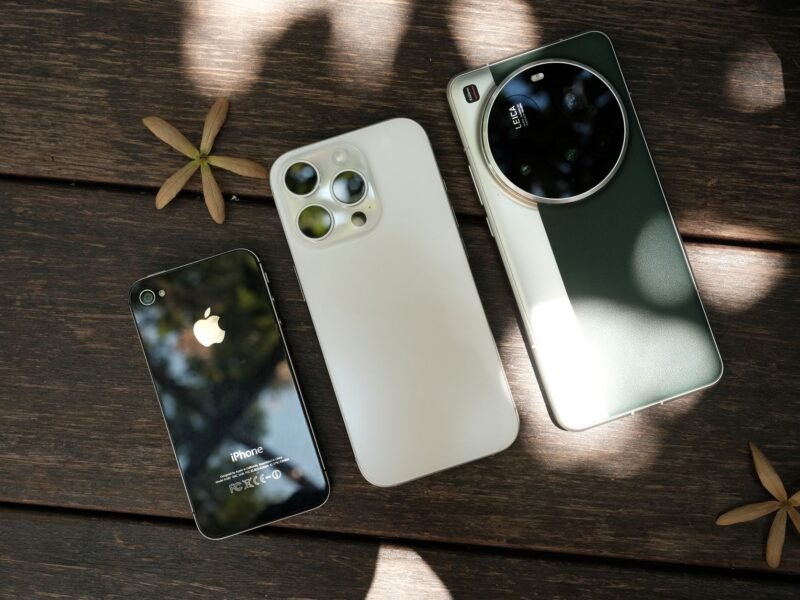
iPhone vs Samsung comes down to three things: what you already own, how much you want to spend, and how much you like to change settings. Choose an iPhone if you use a Mac, iPad or Apple Watch, or if your family chats in iMessage. Choose a Samsung Galaxy if you want more models, lower starting prices, bigger zoom or a phone you can set up your own way.
Below are the 9 differences that decide it, with prices and specs taken from Apple’s and Samsung’s own pages on November 17, 2026. This is a comparison of what the two makers publish, not a lab review.
iPhone vs Samsung comparison at a glance
| Difference | iPhone | Samsung Galaxy |
|---|---|---|
| 1. US prices in this guide | $699 to $1,999 | $349.99 to $2,099.99 |
| 2. Software | iOS 27, same on every iPhone | Android with Samsung’s One UI |
| 3. Update promise | No published number; iOS 27 still runs on the 2019 iPhone 11 | 7 years on Galaxy S26; up to 6 on Galaxy A |
| 4. Cameras | 48MP sensors across the Pro system | 200MP main and two zoom cameras on the Ultra |
| 5. Battery and charging | Up to 45 hours of video playback (18 Pro Max) | Up to 5,000 mAh (S26 Ultra) |
| 6. Messaging | iMessage, FaceTime, RCS | RCS and SMS through Android |
| 7. Other devices | Mac, iPad, Apple Watch, AirPods | Galaxy devices, plus AirDrop support on Galaxy S26 |
| 8. AI | Apple Intelligence and Siri AI | Galaxy AI with Bixby, Gemini and Perplexity |
| 9. Shapes | One foldable (iPhone Duo) | Three foldables (Z Fold8 Ultra, Z Fold8, Z Flip8) |
1. Price: Samsung starts lower, both end near $2,000
Samsung sells phones at almost every price. Apple sells fewer models and its cheapest new one costs twice as much as Samsung’s cheapest Galaxy A in this list.
| Tier | iPhone (starting price) | Samsung (starting price) |
|---|---|---|
| Budget | iPhone 17e, $699 | Galaxy A27 5G, $349.99; A37 5G, $449.99; A57 5G, $549.99 |
| Standard flagship | iPhone 17, $899; iPhone 16, $799 | Galaxy S26, $899.99 |
| Large or thin | iPhone Air, $1,099 | Galaxy S26+, $1,099.99 |
| Top model | iPhone 18 Pro, $1,199 | Galaxy S26 Ultra, $1,299.99 |
| Foldable | iPhone Duo, $1,999 | Z Flip8, $1,199.99; Z Fold8, $1,899.99; Z Fold8 Ultra, $2,099.99 |
iPhone prices are from Apple’s iPhone store page, which notes that the iPhone 17 and iPhone 16 prices include a $30 discount for activating with a carrier. Samsung prices are the launch prices in its US press releases for the Galaxy S26 series and the Galaxy Z Fold8 and Z Flip8. Store and carrier deals change often, so check the current price before you buy.
If your budget is under $600, Samsung is the only one of the two with a new phone for you. Our budget smartphone guide covers what to look for at that price.
2. Software: one iOS for all, or Android the Samsung way
Every current iPhone runs iOS 27, and it looks and works the same on a $699 iPhone 17e as on an iPhone 18 Pro. That makes an iPhone easy to learn and easy to help a relative with.
Samsung phones run Android with Samsung’s own layer, One UI, on top. In general, a Samsung gives you more control over how the home screen, buttons and default apps behave, at the cost of more menus to learn. If you enjoy adjusting things, that is a plus. If you never open settings, it will not matter much.
Both systems have strong privacy controls, but they work differently. We compare them in iPhone vs Android privacy.
3. Updates: Samsung makes a promise, Apple has a track record
Samsung states its support in writing. The Galaxy S26 series gets seven generations of Android upgrades and seven years of security updates from its launch date. The cheaper Galaxy A27 5G gets up to six of each.
Apple does not publish a number of years on its iPhone pages. What it does show is the list of phones that run the newest system: iOS 27 is compatible with the iPhone 11 and later, and the iPhone 11 came out in 2019. So a seven-year-old iPhone is still getting this year’s software.
In practice, both brands now support a flagship phone for about as long as most people keep one. The gap is at the low end: check the update promise before buying an older or cheaper model from either maker.
4. Cameras: Samsung has more zoom, megapixels are not the whole story
On paper, the Galaxy S26 Ultra carries the most hardware: a 200MP main camera, a 50MP ultra-wide, a 50MP telephoto with 5x optical zoom and a second 10MP telephoto with 3x optical zoom. The iPhone 18 Pro uses 48MP sensors for its main, ultra-wide and telephoto cameras, and its main camera has a variable aperture.
The standard models are closer. The Galaxy S26 has a 50MP main camera, a 12MP ultra-wide and a 10MP 3x telephoto. The iPhone 17 has a 48MP Dual Fusion system and no separate telephoto lens.
A bigger megapixel number does not mean a better photo; processing matters as much. If photos are your top reason to buy, read our best camera phones guide, which goes through each maker’s published camera specs.
5. Battery and charging: different numbers, so compare with care
The two companies describe batteries in different ways. Samsung gives capacity: 4,300 mAh in the Galaxy S26, 4,900 mAh in the S26+ and 5,000 mAh in the S26 Ultra. Apple gives hours: up to 30 hours of video playback on the iPhone 17, 36 on the iPhone 18 Pro and 45 on the iPhone 18 Pro Max.
You cannot convert one figure into the other, so treat any “winner” claim with caution.
| Phone | Screen | Weight | Fast charging (maker’s figure) |
|---|---|---|---|
| iPhone 17 | 6.3-inch, up to 120Hz | 177 g | 50% in 20 minutes with a 40W adapter |
| Galaxy S26 | 6.3-inch, 120Hz | 167 g | 55% in about 30 minutes with a 25W adapter |
| iPhone 18 Pro | 6.3-inch | 211 g | 50% in about 15 minutes with a 60W-capable adapter |
| Galaxy S26 Ultra | 6.9-inch, 120Hz | 214 g | 75% in about 30 minutes with a 60W adapter |
Apple says its fast-charging adapters are sold separately. Whichever phone you pick, the habits in our battery health guide will keep it going longer.
6. Messaging: blue bubbles still matter in the US
iMessage only works between Apple devices. Apple’s support page explains the split: iMessage chats show in blue and are end-to-end encrypted, while chats with Android phones use RCS or SMS and show in green.
The green-bubble experience is better than it used to be. According to Apple’s page on iMessage, RCS and SMS, RCS on iPhone (iOS 18 or later) supports high-resolution photos and videos, read receipts and typing indicators. End-to-end encrypted RCS is in beta from iOS 26.5 and depends on both people’s carriers supporting it.
So a Samsung owner can text iPhone friends without the old blurry videos. But you will not be in iMessage group chats as a blue bubble. If your family or friends rely on those chats, that is a real reason to stay with iPhone. If your group uses WhatsApp, it makes no difference.
7. Other devices: the phone is only part of what you buy
This is the difference most people feel after buying. An iPhone works closely with other Apple products: Handoff, Universal Clipboard, iPhone Mirroring on a Mac and AirDrop all need Apple devices on both ends. An Apple Watch needs an iPhone too; Apple lists the current models as requiring an iPhone 11 or later with iOS 27.
Samsung has its own family of watches, earbuds, tablets and laptops, and it is closing one gap. Samsung says AirDrop support through Quick Share is available on the Galaxy S26 series and is being extended to older flagships with One UI 8.5, though availability varies by market. That makes sending a photo to an iPhone owner much simpler than before.
A fair rule for iPhone vs Samsung: if you already own an Apple Watch or a Mac, switching to Samsung costs you more than the price of the phone.
8. AI: Apple keeps it in-house, Samsung gives you a choice
Apple calls its features Apple Intelligence, with the new Siri AI at the center. It needs a recent phone: Apple lists all iPhone 16 models and later, plus the iPhone 15 Pro and 15 Pro Max.
Samsung’s Galaxy AI on the S26 series takes a different approach. Samsung says the phones include an upgraded Bixby and a choice of other agents, including Google’s Gemini and Perplexity, along with Circle to Search. If you already use Gemini, a Galaxy will feel familiar. For the basics of what phone AI can and cannot do, see what mobile AI is.
9. Shapes: Samsung has three foldables, Apple now has one
Samsung has made folding phones for years and now sells three: the book-style Galaxy Z Fold8 and Z Fold8 Ultra, and the smaller flip-style Z Flip8, which at $1,199.99 is the cheapest foldable from either company.
Apple’s first foldable, the iPhone Duo, opens to a 7.6-inch display, has a 5.4-inch outer display and starts at $1,999. If you want a flip phone, Samsung is your only choice of the two.
Which is better, iPhone or Samsung, for you?
There is no single answer to which phone is better, iPhone or Samsung. Match the phone to your situation instead:
- You own a Mac, iPad or Apple Watch: iPhone.
- Your family uses iMessage and FaceTime: iPhone.
- You want to spend under $600 on a new phone: Samsung Galaxy A series.
- You want the longest zoom: Galaxy S26 Ultra.
- You want a written seven-year update promise: Galaxy S26 series.
- You want the simplest phone to learn or to hand to a parent: iPhone.
- You like to customize, or you want a flip phone: Samsung.
- You use a Windows PC and Google services: either brand works well.
If you are still undecided between Android brands, our Samsung vs OnePlus comparison looks at the other side of that choice.
Switching between iPhone and Samsung: what moves across
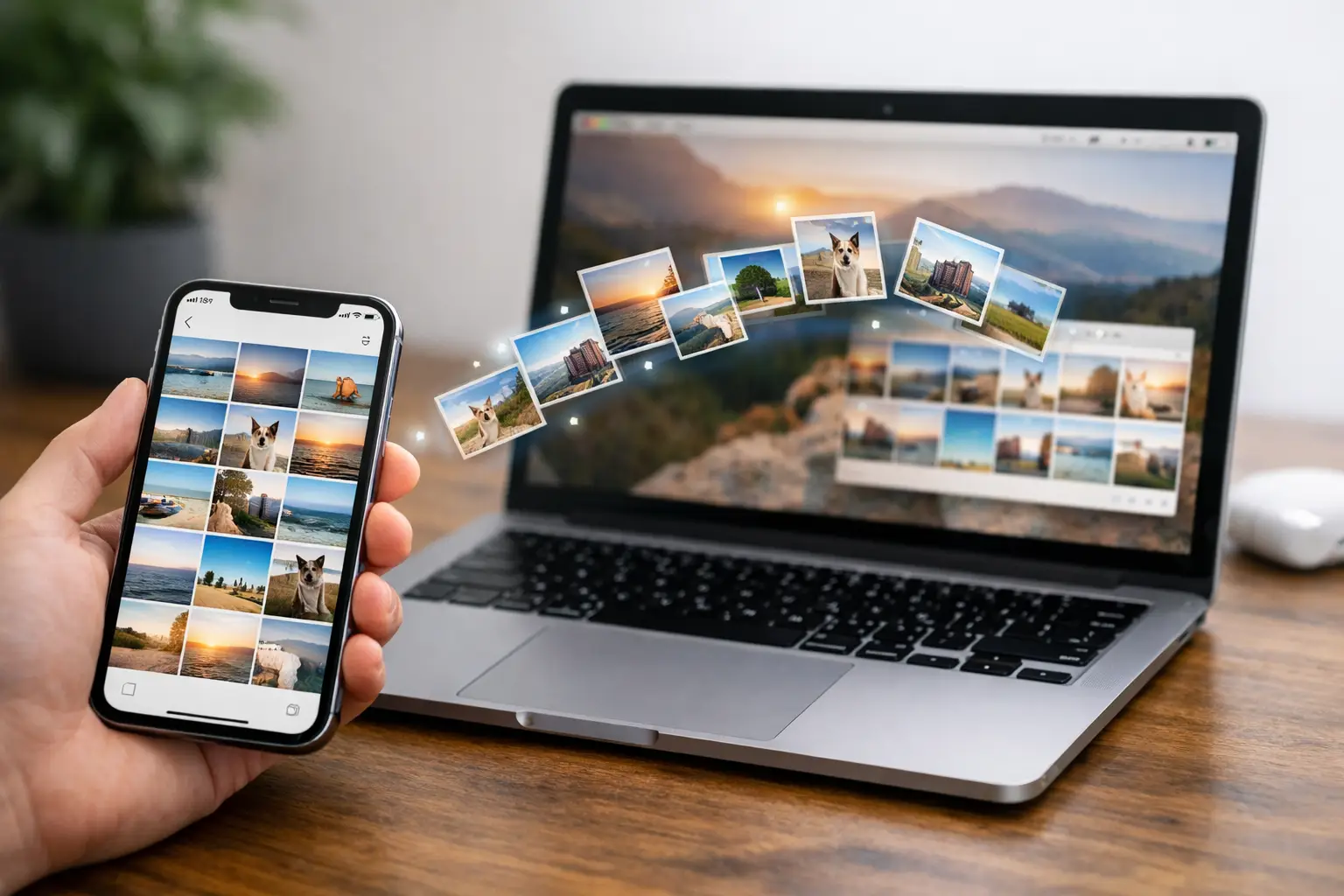
Changing sides is easier than it was. Both makers have a free transfer tool:
- Samsung to iPhone: Apple’s Move to iOS transfers contacts, message history, photos and videos, files, mail accounts, calendars, call history and WhatsApp messages and media.
- iPhone to Samsung: Samsung’s Smart Switch moves photos, videos, notes, calendar events and device settings, wirelessly or with a USB cable.
What does not move: apps you paid for must be bought again on the other store, and iMessage stays behind when you leave iPhone. Before you switch, our guides to moving contacts from iPhone to Android and moving WhatsApp from Android to iPhone walk through the steps.
Quick answers
What is better, iPhone or Samsung? Neither is better for everyone. iPhone is the better fit if you use other Apple devices or iMessage. Samsung is the better fit if you want more choice of price, more zoom or more control over settings.
Which lasts longer, an iPhone or a Samsung phone? For software, both last a long time. Samsung promises seven years of security updates for the Galaxy S26 series, and Apple’s iOS 27 still supports the iPhone 11 from 2019.
Is a Samsung phone cheaper than an iPhone? At the low end, yes. Samsung’s Galaxy A27 5G starts at $349.99, while the cheapest new iPhone, the iPhone 17e, starts at $699. At the top, a Galaxy S26 Ultra ($1,299.99) costs more than an iPhone 18 Pro ($1,199).
Can a Samsung phone text an iPhone? Yes. Messages go as RCS or SMS and appear in green on the iPhone. RCS supports high-resolution photos, read receipts and typing indicators, but it is not iMessage.
Can I use an Apple Watch with a Samsung phone? No. Apple says its current watches require an iPhone 11 or later with iOS 27.
Apple vs Samsung: which has better AI? They take different routes. Apple builds Apple Intelligence and Siri AI itself, while Samsung’s Galaxy AI lets you choose between Bixby, Gemini and Perplexity. The better one is the assistant you already use.